Exposing Talents: Enhancements in Peptide Analysis
Peptide Survey is Enduring a Extraordinary Upsurge, Supported by State-of-the-Art Processes. These Enhancements Facilitate the Manufacturing of More Intricate Peptides, Disclosing Options in Terrains Such as Medicine Creation. Including Focused Healing and High-Tech Biomaterials, Recognizing Peptide Formation and Performance is Key – Facilitating Creators to Build Entities with Specific Features. The Trajectory of Peptide Research Shows Vast Hope for Fixing Past Challenging Biomedical Concerns and Broadening Awareness of Biological Functions.
This Biochain Analysis Unit: An Emerging Era
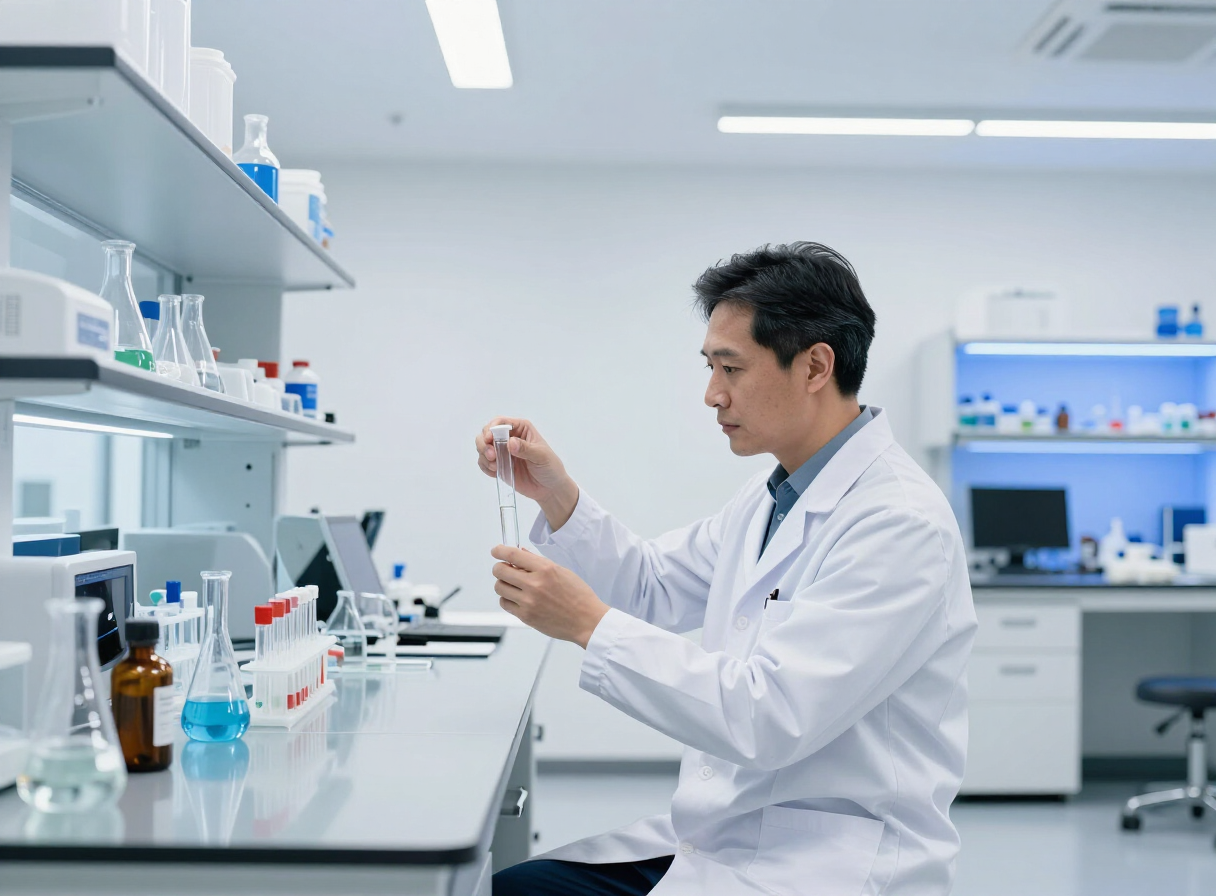
A State-Of-The-Art Peptide Engineering Lab Represents a Significant Advance in the Sphere of Bioscience Investigation. This Is a Specialized Lab To Assemble, Fabricate, and Analyze State-Of-The-Art Peptides with Various Uses, Extending From Selective Cure Distribution to Novel Materials. The Cluster of Technicians Leverages Cutting-Edge Technologies – Leveraging Digital Manufacturing Networks and Elaborate Inspection Apparatus – to Shorten Revelation Steps. They Signify an Innovative Epoch in Custom Therapeutics and Grants Potential Avenues to Manage Previously Unmanageable Conditions, Exemplifying a Pivotal Evolution in Medical Practices and Examination.
Peptide Investigation Institutes: Advancing Progress
Peptide Exploration Facilities Act as a Central Engine in the Biomedical Field, Relentlessly Pursuing Breakthroughs in Peptide-Designed Therapies and Screening. Their Driven Cluster of Investigators Adopts Modern Equipment to Generate, Investigate, and Define Intricate Polymers, Discovering Innovative Modalities for Managing Various Conditions, From Cancer to Neurodegenerative Disorders. This Ongoing Effort Isn’t Just About Creating Molecules; It Deals with Overhauling Health Services Via Custom, Accurate Procedures and Developing Rising Innovators in Peptide Exploration.
Transforming Treatments with Short Biochain Solutions
The Scene of Therapeutic Innovation is Undergoing a Considerable Alteration, Predominantly Sparked by the Flourishing Domain of Peptide Studies. Traditional Small Molecule Approaches Often Face Challenges Referring to Absorption Rate, Accurate Targeting, and Side Reaction Risks; Amino Acid Chains Provide a Persuasive Option. Those Tiny Amino Configurations Carry Fundamental Assets: Frequently Developed, Generated, and Built with Great Selectivity for Cellular Sites, Generating Elevated Remedy Performance. Scientists At This Time Delve Into Several Purposes, Involving Directed Neoplasm Care, Endocrine Disorder Regulation, and Restorative Therapy—All Helped by Direction of Peptide Shape and Behavior.
- Peptide Structures May Be Altered by Different Molecular Attachments for Better Durability and Transport.
- Enhancements in Construction Procedures Facilitate Bulk Production More Possible.
- Intrinsic Biofriendliness of Peptides Decreases Likelihood of Immune Defense, Mainly in Specific Distribution.
Forthcoming Shielding of Treatment Science: The Contribution of Protein Fragment Investigation
Given Conventional Drug Methods Encounter Increasing Hurdles – Rising Drug Resistance, Complex Diseases, and Evolving Patient Needs – Peptide Investigation Reveals a Constructive Track to Shield Therapeutics. This Short Protein Group – Little Series of Protein Peptide Parts – Display Particular Qualities Promoting Goal-Oriented Medicine Release, Tailored Treatments, and Creative Assessments. Distinct from Some Small Particle Solutions, Peptides Might Be Fabricated to Sharply Interface With Physiological Spots, Cut Back Negative Repercussions and Advance Benefits. Relentless Analysis of Peptide Therapies Is Highlighting Fresh Routes in Considerations Such As Neoplasm Healing, Immune Support, and Repair Medicine, Implying an Important Transition Toward Customized and Efficient Clinical Protocols for Successive Times. Besides, Innovations in Peptide Making and Administration Methods Are Regularly Increasing Their Robustness and Utilization, Confirming Their Importance in Imminent Medicine.
Exceeding Standard Treatments: Delving into Short Protein Developments
The Therapeutic Arena is Swiftly Transforming, and Investigators Are Vigorously Hunting Beyond Usual Small Unit Therapeutics. A Encouraging Topic of Exploration lies in Amino Acid Chain Remedies. Those Compact Protein Strings Present an Uncommon Strategy to Address Ailments, Revealing Superior Accuracy and Possibly Minimizing Negative Outcomes Relative to Classic Therapies. The Potential for Creating Customized Peptides That Interact with Specific Biological Targets Is Driving Substantial Research, leading to Cutting-Edge Treatments Covering Multiple Illnesses Including Oncology, Endocrine Issues, Nervous System Ailments, and Immune Disorders.
Amino Acid Chain Exploration Group's Significant Results
The Amino Acid Chain Exploration Group, Managed by Dr. Anya Sharma, Has Unveiled Significant Results that Is Able to Shift the Landscape of Repair Treatments. Their Analysis Targeted at Developing Creative Peptides That Facilitate Tissue Healing and Alleviate Inflammation in Troubled Sections. The Team’s Experiments, Conducted Using Both In Vitro and In Vivo Models, Indicated Great Improvements in Cutaneous Repair and Evident Declines in Cicatrix Development—Propitious Data for Soothing Severe Burn Afflictions and Chronic Skin Ulcers. Specifically, They Isolated a Singular Peptide Arrangement Believed to Regulate Mesenchymal Stromal Cell Function, Channeling Their Transformation Into Restorative Cells. The Scientists Consider These Peptides to Have Great Promise and Are Currently Investigating Their Use in Treating Multiple Degenerative Conditions—Continued Research Is Designed with Clinical Evaluations Forecasted Shortly.
- Existing Attention: Assessing Suitability for Spinal Lesions.
- Expected Aim: Formulating a Dermatological Solution for Practicality.
- Important Partnership: Partnering with Pharmaceutical Companies for Scaling Production.
Boosting Biomaterials With Peptide Engineering
Expansion in Biomaterials Is Considerably Driven by Peptide Techniques. Protein Peptide Units Supply Extraordinary Framework Variation, Empowering the Formation of Structures Which Effectively Copy the Native Extracellular Architecture, Enhance Cell Gluing, Linking, and Response, And Deliver Therapeutic Agents. The Refinement Enfolds Auto-Synthesized Peptides Constructing Hydrogels for Biological Scaffolds, Peptide-Tailored Interfaces Improving Incorporation, and Signal-Activated Peptides Supporting Precision Drug Dispensation—Finally Revolutionizing Healing Technologies and Surpassing Old Boundaries. Additional Studies Aim at Refining Peptide Patterns, Improving Physical Material Strengths, and Increasing Manufacture for Clinical Use.
Short Protein Exploration and the Prospective Cycle of Therapies
The Expanding Domain of Peptide Research Is Ready to Transform Healthcare, {Ushering in a New Generation of Therapies|Bringing a Fresh Wave of Treatments|Introducing an Innovative Era of Cures|Starting an Advanced Age of Medicines|Launching an Emerging Phase of Healings|Initiating a Progressive Stage of Remedies|Beginning a Prospective Cycle of Therapies|Opening an Approaching Epoch Fusion Peptide Technology of